Recent Blogs
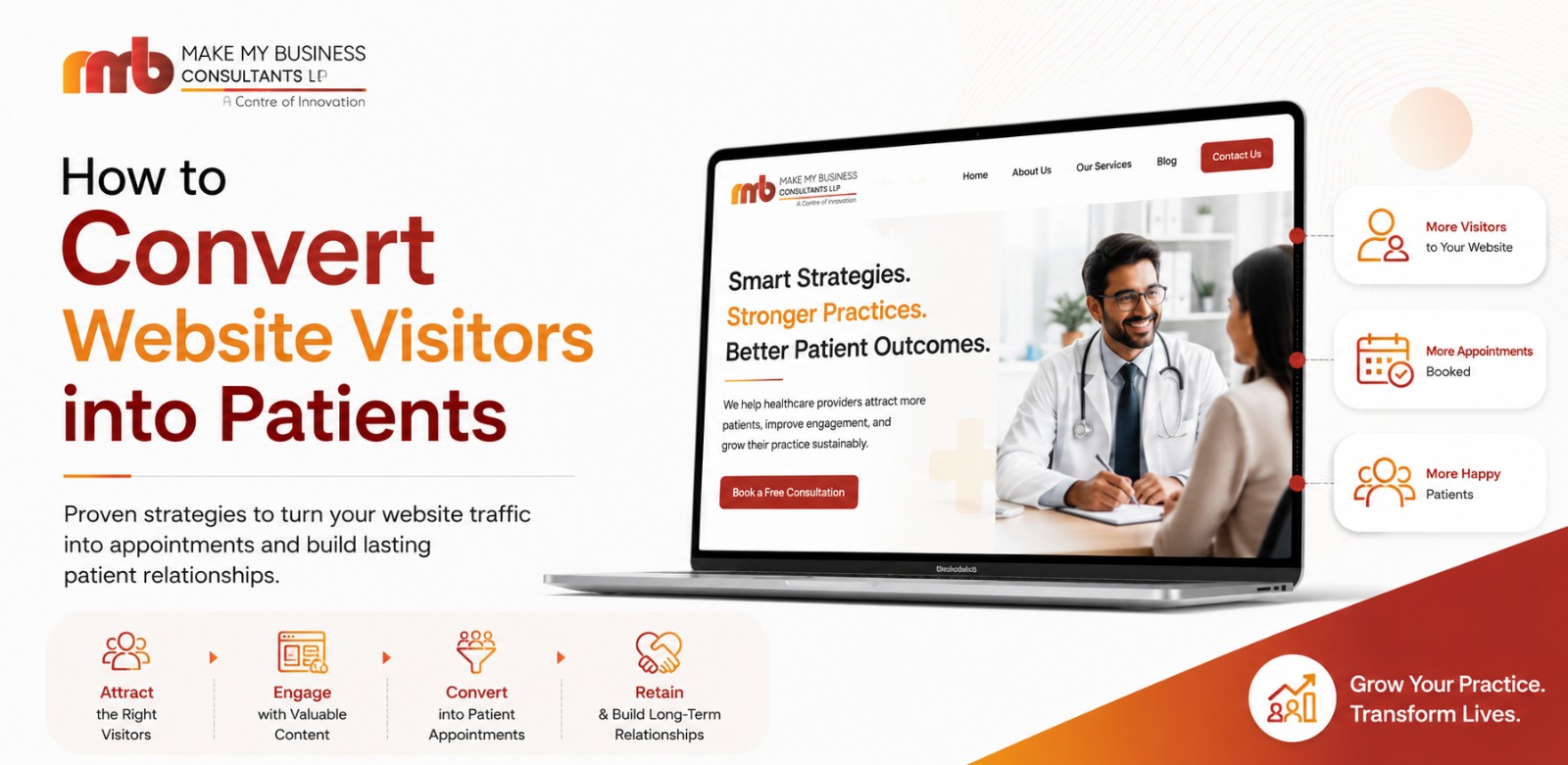
How to Convert Website Visitors into Patients
Nowadays, most patients first turn to Google when seeking accurate...
Read More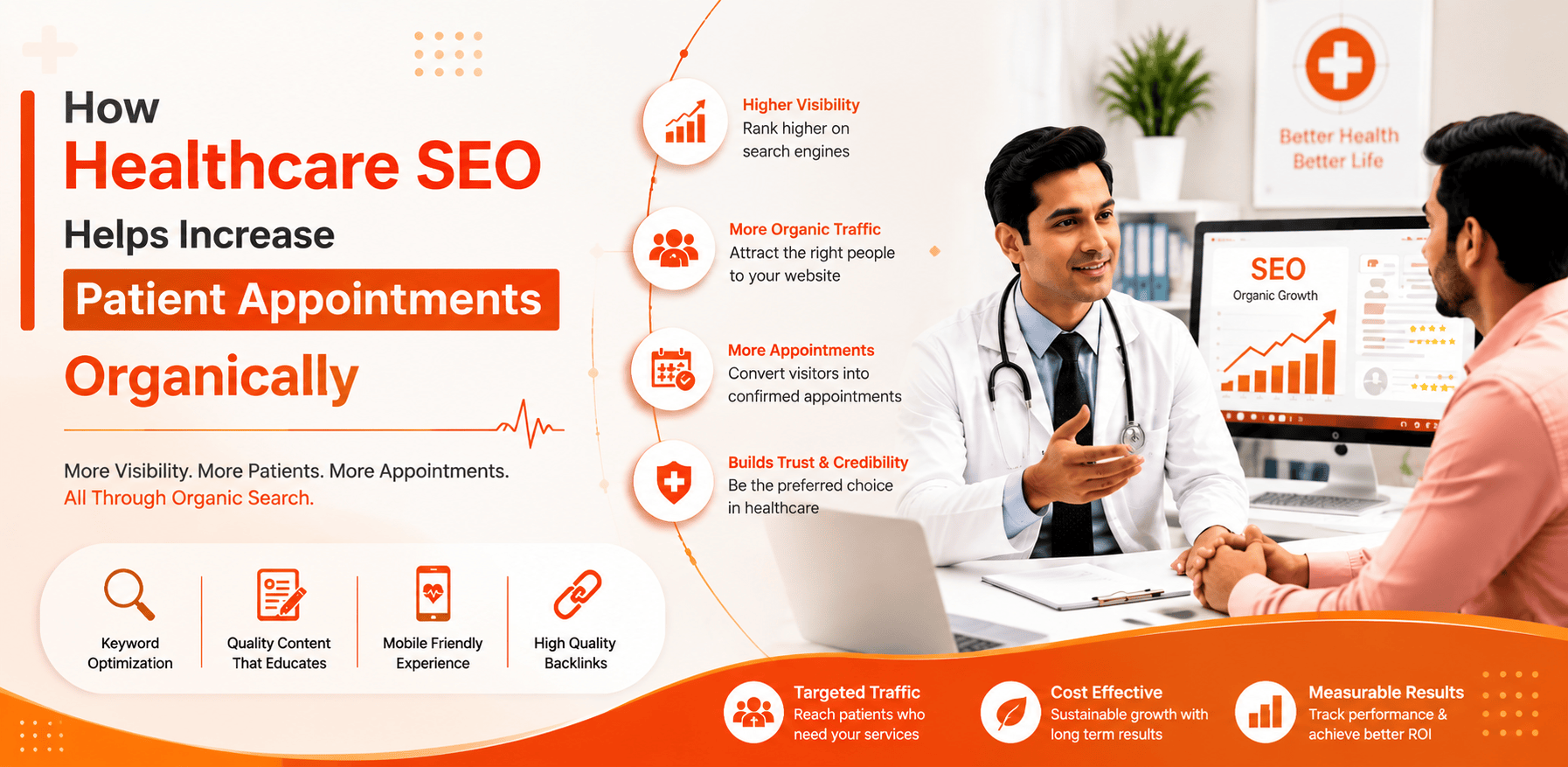
Understanding Why Website Visitors Don't Become Patients?
First and foremost, it is essential to understand that healthcare SEO...
Read More
Why Are There No Enquiries Despite Traffic to the Hospital Website?
In today's digital era, almost every hospital wants its website to appear at the top of Google search results
Read More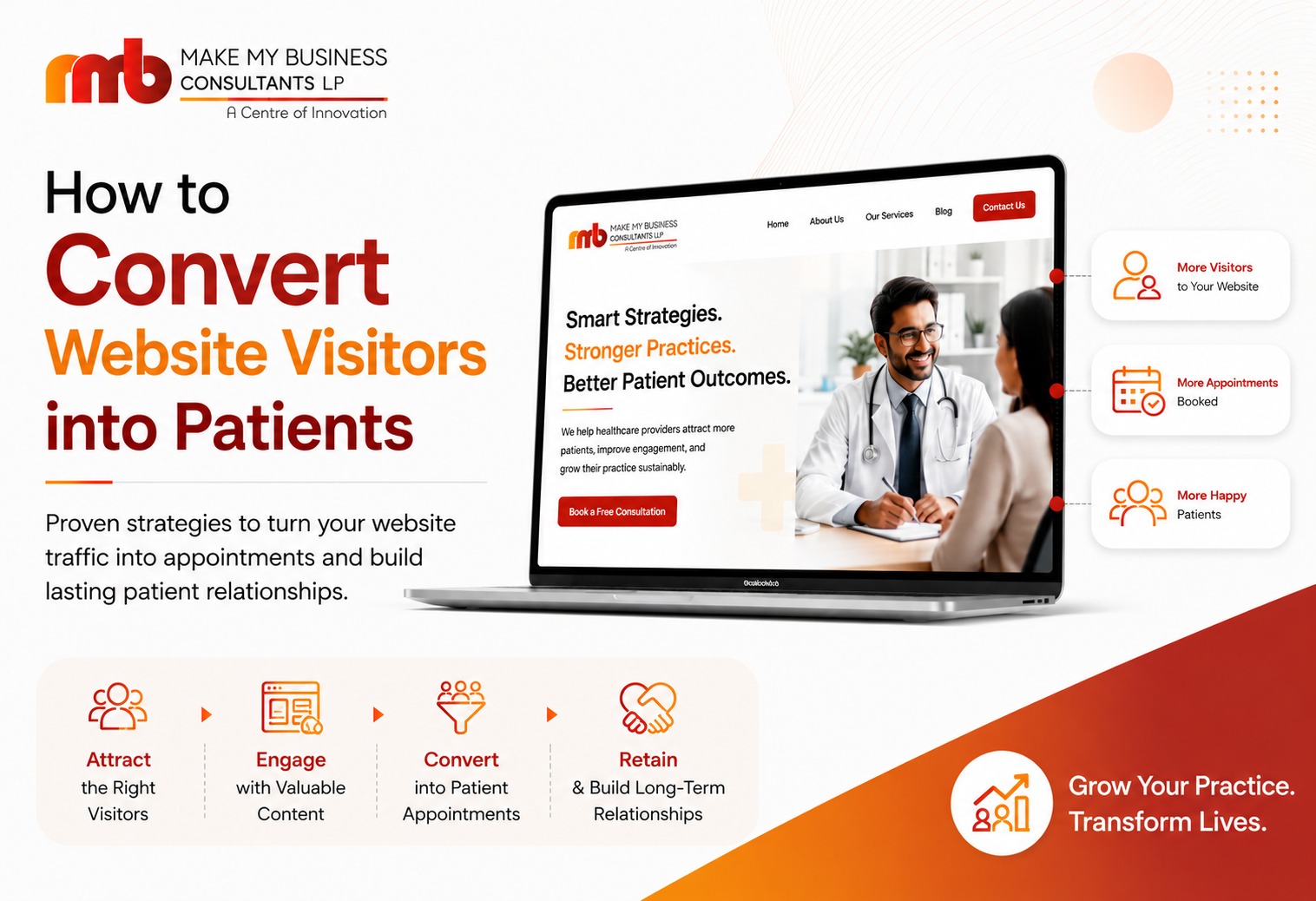
Understanding Why Website Visitors Don't Become Patients?
Nowadays, most patients first turn to Google when seeking
accurate information about doctors, clinics, or hospitals.
However, simply driving high traffic to a website does not
equate to complete success. If visitors do not book
appointments after viewing the site, there could be several
significant reasons for this.
The primary reason could be slow website loading speeds; if a
site takes too long to open, most people leave without
gathering any information. Another major factor is a lack of
mobile-friendliness, given that most people today use
smartphones to search for healthcare-related information.
Trust is also a crucial factor. If details regarding a
doctor's qualifications, experience, patient reviews, success
stories, and certifications are not clearly displayed,
visitors may struggle to build trust. Furthermore, if
information about services, treatment procedures, fees, or
contact details is unclear, potential patients may hesitate to
make a decision.
Another important reason is the absence of an effective
Call-to-Action (CTA). Without clear options like "Book an
Appointment," "Call Now," or "Get an Online Consultation,"
visitors may not know what step to take next.
But, a lack of regularly published, useful, and reliable
health-related information can erode public trust. Therefore,
the focus should not merely be on increasing traffic but also
on ensuring a superior user experience, providing credible
information, offering simple navigation, and facilitating an
easy appointment booking process. These elements play a vital
role in converting website visitors into actual patients.
Common Reasons Healthcare Websites Lose Potential Patients
Despite attracting significant traffic, many healthcare businesses fail to convert visitors into patients. Common Reasons for this include slow website speeds, a poor mobile experience, and cumbersome navigation. If patients cannot easily access information about doctors, treatment services, or quick booking options, they often immediately switch to another website. Furthermore, a lack of patient reviews, certifications, and credible health information erodes trust. Features such as clear calls-to-action (CTAs), easily accessible location details, simple online booking processes, and useful content make a website far more effective. By addressing these areas, healthcare businesses can improve conversion rates and significantly grow their patient base.
The Difference Between Traffic and Patient Conversions
Website traffic simply refers to the number of people visiting your site and spending time there, whereas "patient conversion" signifies the proportion of those visitors who actually book appointments or avail of your services. Merely having high traffic does not guarantee business growth; it is crucial to adopt the right strategy and focus on converting website visitors to sales. For a healthcare website, these "sales" translate into patient bookings, online consultations, or inquiries regarding treatment. A superior user experience, clear Calls-to-Action (CTAs), credible information, and a streamlined appointment booking process play a pivotal role in converting website traffic into actual patients and successfully turning visitors into sales.
Build Trust Before Asking Visitors to Book an Appointment
The primary objective of a medical website is not merely to
create high-quality content, but to genuinely convert visitors
into patients. Visitors rarely book an appointment upon their
very first visit; instead, they first seek educational
information about the doctor, the clinic, and the available
services.
Ensure the website authentically displays the doctor's
qualifications, experience, expertise, and certifications.
Additionally, sharing genuine reviews, success stories, and
patient experiences helps build trust among new visitors,
making them more likely to avail themselves of your services.
Information regarding services, treatment procedures, fees,
the clinic's address, and contact details should be presented
in simple, accessible language. Features such as a Frequently
Asked Questions (FAQ) section, useful health-related blogs,
and a straightforward appointment booking process enhance the
visitor experience. Furthermore, a secure website (HTTPS) and
an easy-to-use online form help strengthen user trust.
When visitors perceive that your website offers reliable and
useful information, the likelihood of conversion naturally
increases. Therefore, rather than focusing solely on immediate
appointment bookings, prioritize building trust first.
Establishing a strong foundation of trust is essential for
fostering long-term patient relationships and ensuring the
success of your practice.
Display Reviews, Testimonials, and Patient Success Stories
Displaying patient reviews, testimonials, and real-life success stories on a healthcare website is considered an effective way to build trust. When new visitors read about the positive experiences of other patients, they gain a better understanding of the quality and reliability of your services. This trust plays a crucial role in strengthening the process of converting customers into patients. Positive feedback alleviates the concerns of potential patients and gives them the confidence to book an appointment. Whenever possible, be sure to include verified reviews, "before-and-after" results (where appropriate and with consent), and written or video testimonials from patients. Transparency and authentic experiences enhance your website's credibility, thereby increasing both the likelihood of patient conversion and the overall patient count.
Highlight Certifications, Experience, and Expertise
It is crucial for any healthcare website to clearly display doctors, certifications, years of experience, and areas of expertise. When visitors observe or read about your qualifications, medical training, and specialized services, their trust in you grows. This trust strengthens the process of converting customers into patients and encourages them to book appointments. Be sure to list certifications, professional memberships, areas of specialization, and achievements. Additionally, include doctor profiles, positive patient feedback, and examples of successful treatments. Transparent and credible information alleviates the concerns of potential patients, thereby increasing conversion rates and attracting more patients to your healthcare practice.
Optimize Your Website for the Better Patient Conversions
It is very important to note that it is not enough to just
drive more traffic to the website, but converting that traffic
into patients is the real success. Therefore, the healthcare
website should be optimized in such a way that it makes the
process of
converting website visitors to sales very
simple and effective. Here "sales" means patients booking
appointments, seeking online consultation or contacting for
treatment.
First of all, keep the loading speed of the website fast and
ensure that it is mobile-friendly. Today most people search
for doctor and hospital information through smartphones. If a
website is slow or difficult to use, visitors will quickly
move to another website.
Display clear Call-to-Action (CTA) like “Book an Appointment
Now”, “Contact the Doctor” or “Take Online Consultation” at a
prominent place on the website. Also include the doctor's
qualifications, experience, patient reviews, certifications
and success stories, so that the confidence of potential
patients increases.
Easy navigation, secure (HTTPS) website, simple appointment
form and helpful health related blogs also provide a better
user experience. The right combination of all these elements
makes converting website visitors to sales more effective.
When visitors get reliable information, a seamless experience,
and a clear option to take immediate action, they are more
likely to become patients. This strategy plays an important
role in the online success of the healthcare practice and
increasing the number of patients.
Create Clear and Visible Calls-to-Action
On any healthcare website, clear and highly visible Calls-to-Action (CTAs) encourage visitors to take the next step immediately. CTAs such as "Book an Appointment Now," "Contact a Doctor," or "Get an Online Consultation" should be prominently placed. This enables users to select the right option without confusion. Effective CTAs, a fast-loading website, and simple navigation work together to strengthen the process of converting website traffic into sales. In the healthcare sector, this converts directly to more appointments, improved patient conversion rates, and a greater number of patients utilizing the clinic or hospital's services.
Simplify Appointment Booking Forms
If the appointment booking form is overly long or complex, many visitors might abandon the process midway. Therefore, ask only for essential information - such as name, mobile number, email, preferred date, and a brief description of the issue. Features like a mobile-friendly design, easy navigation, and a one-click submit option help enhance the user experience. The simpler and faster the booking process, the greater the likelihood that visitors will successfully book an appointment and avail themselves of your healthcare services.
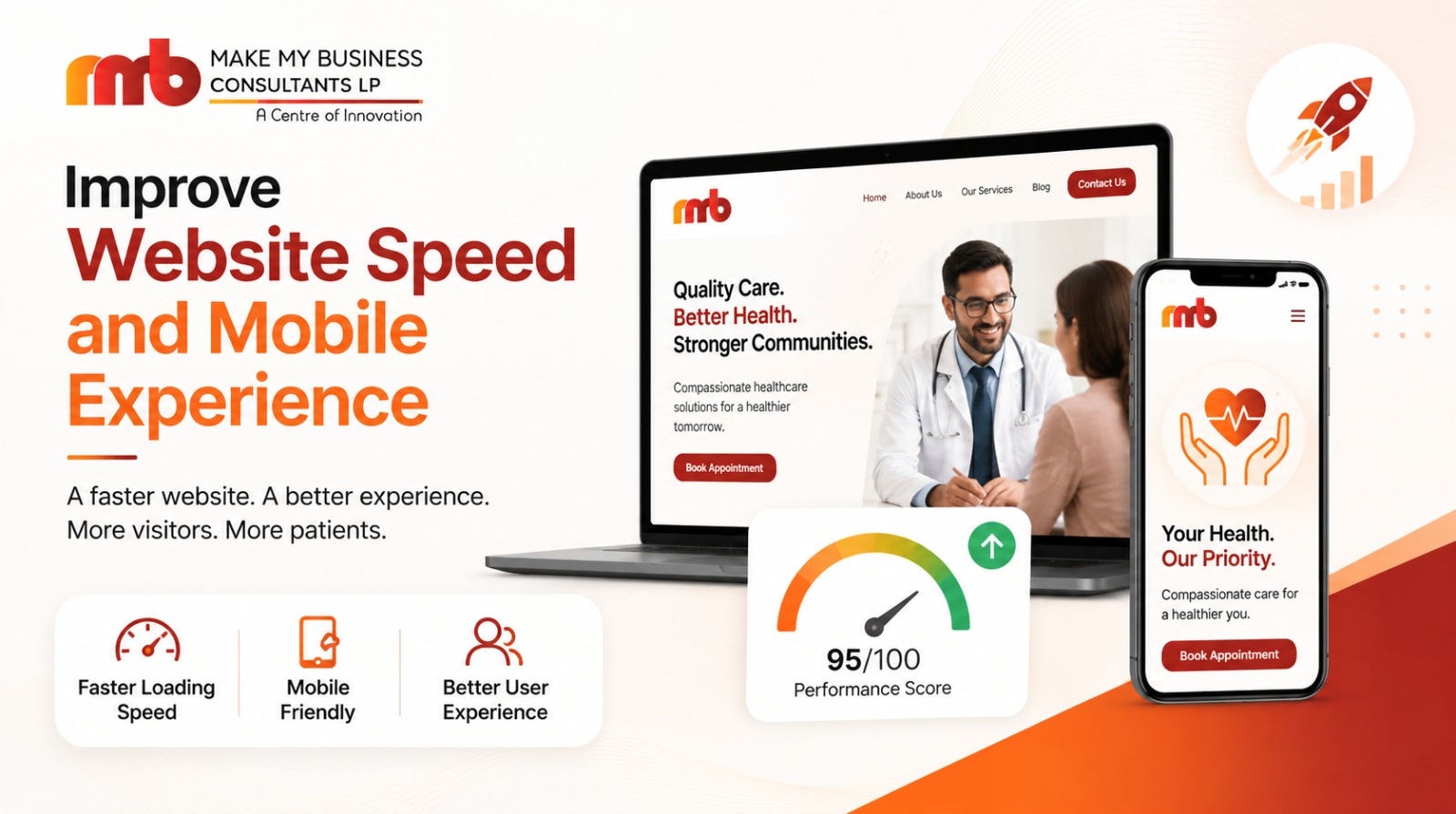
Improve Website Speed and Mobile Experience
A slow website can often drive patients to immediately switch to another Website. Therefore, ensure your website loads quickly and remains fully mobile-friendly. Fast-loading pages, simple navigation, and optimal performance across all devices enhance the user experience. When visitors can access information without hassle and easily book appointments, the likelihood of converting website traffic to sales increases significantly. Superior speed and a seamless mobile experience strengthen both the credibility of your healthcare website and patient conversion rates.
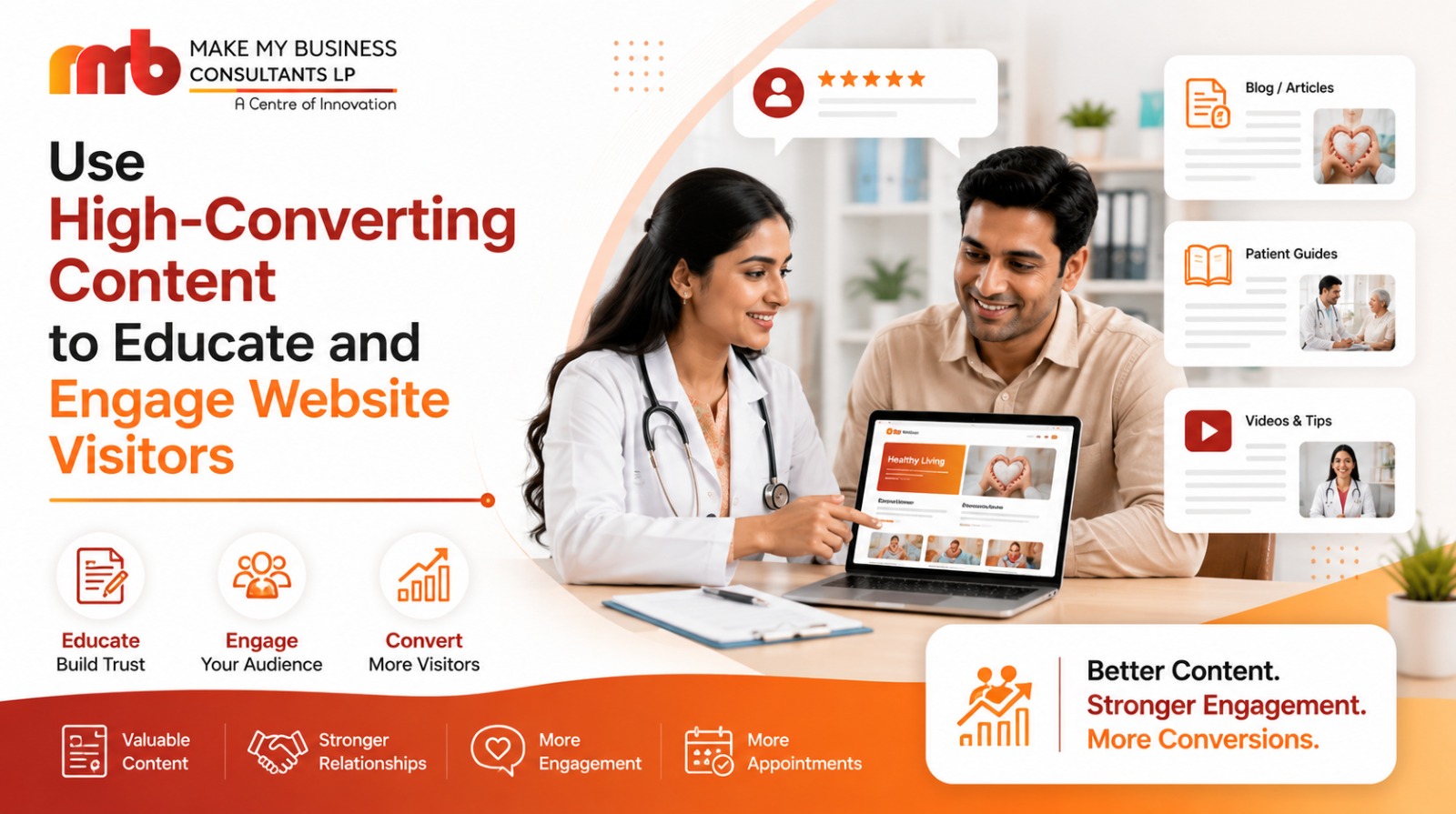
Use High-Converting Content to Educate and Engage website Visitors
For a healthcare website, simply providing basic information
is not enough, it is very important to create content that
educates visitors, offers solutions to their health issues,
and inspires confidence in your services. Such high-converting
content keeps visitors engaged and encourages them to book
appointments.
Regularly publish quality articles on topics such as helpful
blog posts, solutions for common health issues, simple
treatment procedures, preventive measures, expert medical
advice, and Frequently Asked Questions (FAQs). Content
featuring accessible language, clear information, and reliable
facts builds trust and showcases your expertise.
Incorporating engaging headlines, infographics, videos, and
success stories from real patients helps keep visitors on your
website longer. Additionally, ensure every article includes a
clear Call-to-Action (CTA) such as "Book an Appointment Now,"
"Contact a Specialist," or "Get an Online Consultation" so
readers can easily take the next step.
Regularly updated, SEO-friendly, and user-centric content not
only improves your website's search rankings but also
strengthens the trust of potential patients. When your website
provides accurate and useful answers to people's questions,
they are more likely to choose your services. This strategy
plays a vital role in converting website visitors into active
patients and driving the online success of your healthcare
practice.
Answer Common Patient Questions
Providing simple and accurate answers to common patient questions on your healthcare website is an effective way to build trust. Clearly addressing queries regarding treatment procedures, doctor availability, fees, appointments, tests, and recovery helps alleviate patient concerns. This transparency strengthens the process of converting visitors into customers, as people are more likely to place their trust in a provider when they have access to reliable information. Share useful insights through FAQ sections, blogs, and guides. When potential patients can easily find the information they need, they are more motivated to book an appointment and choose your healthcare services, thereby increasing the likelihood of conversion.
Create Service Pages Focused on Patient Needs
Design every service page on your healthcare website with a keen focus on the actual needs and concerns of patients. Clearly outline details regarding the treatment, its benefits, the procedure, the doctor's expertise, the expected recovery time, and appointment options on each page. Using simple language and reliable information builds visitor trust and makes the process of converting customers more effective. Incorporate elements such as patient reviews, Frequently Asked Questions (FAQs), and a clear Call-to-Action (CTA) like "Book an Appointment Now" into every service page. Such user-centric pages increase the likelihood of converting customers and help connect more patients with your healthcare services.
Do Follow Ups and Retargeting to Recover Lost Visitors
It is quite rare for a customer visiting a website to book an
appointment on their first visit. Many people visit solely to
gather information and leave without taking any action.
Therefore, adopting effective follow-up and retargeting
strategies is crucial to re-engage these potential patients.
If a visitor fills out an appointment form but does not
complete the process, a polite reminder can be sent via email,
SMS, or WhatsApp. This message could include an online booking
link, details on doctor availability, or information about
specific health services, thereby increasing the likelihood of
them returning to book an appointment.
Retargeting ads allow you to reach out again to individuals
who have previously visited your website. You can encourage
them to return by showcasing relevant treatments, positive
patient reviews, success stories, or time-limited offers on
health check-ups.
Additionally, follow-up messages should always be helpful,
personalized, and non-intrusive; sending an excessive number
of messages can have a negative impact. Sharing the right
information at the right time builds trust among potential
patients and motivates them to choose your healthcare
services. Regular follow-ups and smart retargeting not only
bring back lost visitors but also play a vital role in
increasing patient volume and boosting the clinic's online
success.
Email Follow-Up Strategies for Healthcare Practices
Email follow-ups are an effective way for healthcare practices to stay connected with both prospective and existing patients. If someone leaves the website without booking an appointment, be sure to send a polite reminder email. The email should include an appointment link, details on doctor availability, useful health information, and contact details. Emails can also be sent to remind patients about screenings, follow-up visits, vaccinations, or routine health check-ups. Each email should be concise and personalized, featuring a clear call-to-action (CTA). Regular yet balanced email follow-ups build patient trust, improve appointment rates, and help foster strong, long-term relationships.
Retargeting Ads to Bring Visitors Back
Retargeting ads are considered the most effective way to re-engage individuals who visited your website but left without booking an appointment. Through these ads, you can showcase information about your services, patient reviews, special health check-ups, or online consultations to them again. When displayed at the right moment, retargeting ads strengthen the process of convert website traffic to sales. This encourages potential patients to return to the site, builds trust, and significantly increases the likelihood of them booking an appointment.
Measure and Improve Your Conversion Rate Continuously
The true measure of a healthcare website's success is not just
traffic, but how effectively you convert visitors into
patients. Therefore, regularly measuring and continuously
improving your conversion rate is crucial.
To achieve this, analyze key website data such as appointment
bookings, contact form submissions, calls, bounce rates, and
visitor behavior. These metrics reveal which pages are
performing well and which ones require improvement.
If your website attracts visitors but generates few
appointments, focus on enhancing your content, Call-to-Action
(CTA), page design, and booking process. Conduct A/B testing
on different CTAs, headlines, and layouts to determine which
options are most effective at converting visitors.
Additionally, value patient feedback and suggestions. Regular
updates, a fast-loading website, intuitive navigation, and
consistently reliable information enhance the user experience.
By continuously analyzing data and making incremental
improvements, you increase visitor conversion rates, secure
more appointments, and strengthen the online success of your
healthcare practice.
Key Metrics Every Healthcare Website Should Track
If your goal is to converting visitors, simply tracking website traffic is not enough. Regularly monitor key metrics such as appointment booking rates, conversion rates, bounce rates, average time spent, form submissions, click-to-call actions, and traffic sources. These figures reveal which pages are performing well and which ones need improvement. By analyzing the right data, you can refine your website strategy, increase visitor conversions, and connect more potential patients with your healthcare services.
Testing and Improving Conversion Elements
To achieve better results on your website, regularly test conversion elements such as Calls-to-Action (CTAs), appointment forms, headlines, buttons, and page layouts. Use A/B testing to evaluate the performance of different options and adopt the one that yields the best results. This process makes converting website visitors in sales more effective. For a healthcare website, this translates to more visitors booking appointments or engaging with your services. Continuous improvement enhances the user experience and leads to a steady increase in conversion rates.
Conclusion
It is crucial to understand that a successful healthcare website is not merely about attracting a high volume of visitors; rather, it focuses on earning their trust and converting them into actual patients. To achieve this, elements such as a fast-loading site, a mobile-friendly design, clear Calls-to-Action (CTAs), engaging content, a seamless appointment booking process, and reliable information are essential. Consistently working on these aspects significantly boosts the likelihood of converting website traffic into sales which, in the healthcare sector, translates to more appointments, online consultations, and a growing patient base.
Furthermore, regular performance analysis, A/B testing, and continuous improvements to the user experience make the process of converting visitors into patients even more effective. Patient reviews, details regarding doctors' expertise, and transparent information help build trust among prospective patients. By adopting the right digital strategy, you can not only increase conversions but also ensure the online reputation, credibility, and long-term success of your healthcare practice.