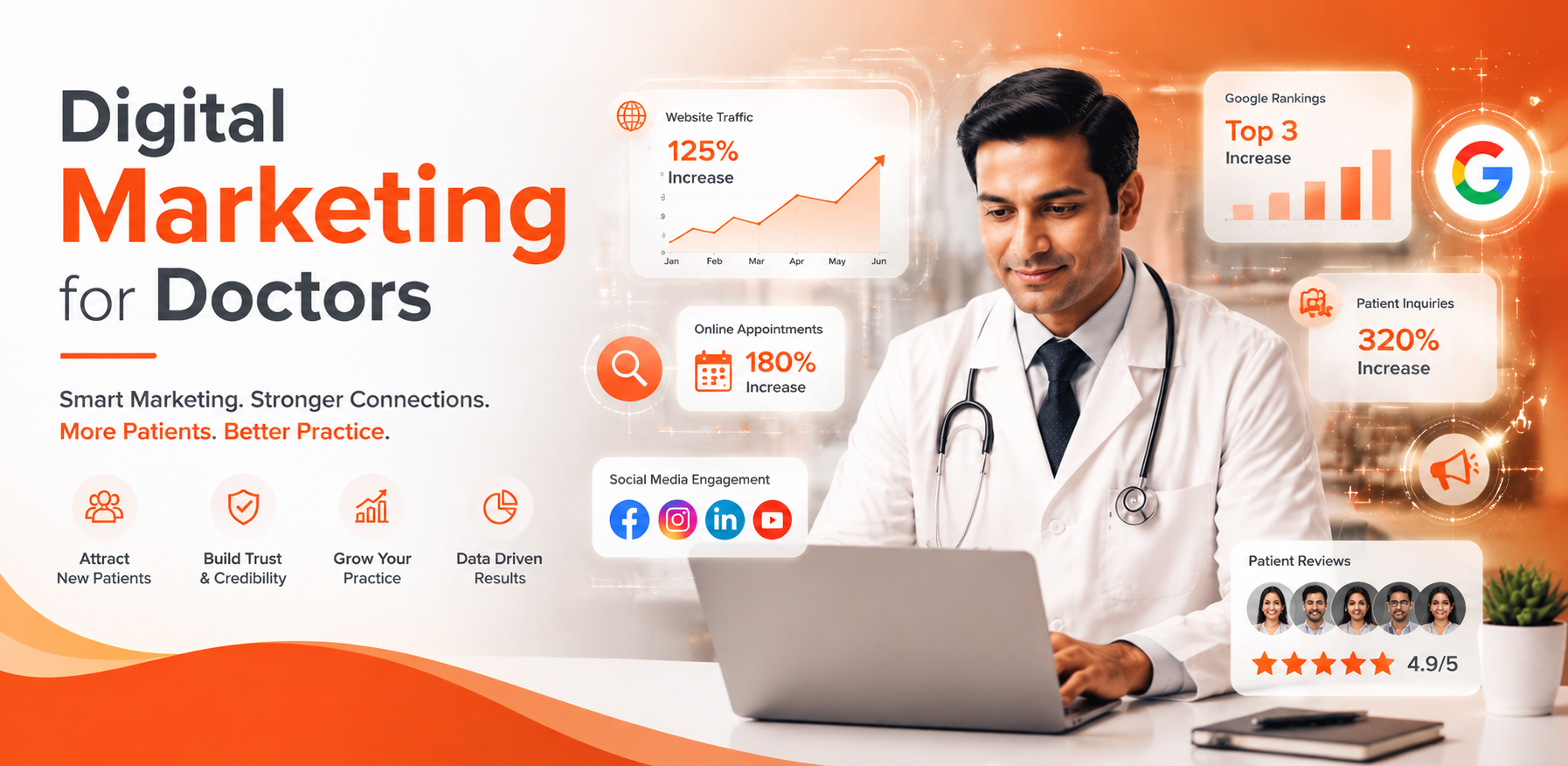
Why is it essential for every specialist
doctor, what should be prioritized, and
how can a strong digital identity be
built?
In today's digital age, patient behavior is
changing rapidly. Previously, people relied
solely on the advice of relatives, family,
or acquaintances to connect with a doctor;
now, however, most patients search for
information about doctors online. They make
decisions based on a doctor's expertise,
experience, patient reviews, services
offered, and online presence.
This is why digital
marketing for doctors
has evolved from a mere promotional tool
into a strategy for building a robust
professional brand. It is particularly
crucial for doctors across various medical
specialties, as the needs, search habits,
and decision-making processes of patients
differ depending on the medical field.
What exactly is digital marketing for doctors?
Digital marketing for doctors refers to the
use of digital strategies that allow doctors
to credibly showcase their expertise,
experience, and services to the right
patients.
Its primary objective goes beyond
simply acquiring more patients; it also
aims to:
- Build the doctor's professional brand
- Establish trust with patients
- Create a highly credible and strong identity on digital platforms
- Convey expertise to the right audience
- Develop long-term reputational value


Which Medical Specialists Need Digital Marketing?
Doctors across almost every medical specialty require digital marketing. However, the strategy may vary depending on the department, for instance:

Cardiologists (Heart Specialists)
Patients searching for heart-related symptoms, treatments, and specialists rely heavily on trusted online information. A strong digital presence helps build credibility.
Orthopedic Doctors
Patients commonly research knee pain, back pain, fractures, and sports injuries online before selecting an orthopedic specialist.
Gynecologists
Women often review doctors' digital profiles before seeking care for pregnancy, infertility, PCOD, menstrual disorders, and other women's health concerns.
Pediatricians
Parents carefully evaluate a pediatrician's experience, reputation, and patient reviews before making healthcare decisions for their children.
Dermatologists
Patients looking for skin, hair, and cosmetic treatments usually research online first, making digital branding highly effective.
Neurologists
Patients with migraines, epilepsy, paralysis, and nerve disorders frequently search online to find trusted neurological specialists.
ENT Specialists
Local search visibility is essential for attracting patients seeking treatment for ear, nose, and throat conditions.
Ophthalmologists
Patients searching for eye exams, cataract surgery, LASIK, and vision care prioritize experienced and trustworthy eye specialists.
Dentists
With intense competition in dental care, strong digital branding helps attract new patients and establish long-term trust.
General Physicians
As the first point of contact for most patients, general physicians benefit significantly from strong online visibility.
Endocrinologists
Patients managing diabetes, thyroid disorders, and hormonal conditions often seek experienced specialists through online searches.
Oncologists
Patients facing cancer treatment carefully evaluate an oncologist's expertise, credentials, and professional reputation online.
Psychiatrists
Growing mental health awareness has increased online searches for psychiatrists who provide confidential, compassionate, and reliable care.
Do only new doctors need digital marketing?
Not at all. While new doctors use digital marketing to establish a strong market identity, reach their first patients, showcase their expertise, and build a credible professional image, experienced doctors also utilize marketing to maintain their digital reputation, stay ahead of the competition, reach new patients, and showcase their expertise on a broader scale. What are the key objectives of digital marketing for doctors?
Key Objectives of Digital Marketing for Doctors
Digital marketing helps doctors strengthen their professional presence, build patient trust, and establish long-term credibility in today's competitive healthcare landscape.
1. Professional Brand Building
A doctor's identity extends beyond their name. Their expertise, experience, quality of care, and dedication to patients help build a strong professional brand. Effective digital branding establishes the doctor as a trusted expert in their specialty.
2. Winning Patient Trust
Before choosing a doctor, patients often research qualifications, experience, certifications, specialties, and patient reviews. Transparent and authentic online information builds credibility and patient confidence.
3. Reaching the Right Patients
Digital marketing connects doctors with the right audience based on location, age group, and healthcare needs, helping generate relevant patient inquiries and consultations.
4. Establishing a Strong Online Reputation
Positive patient reviews, consistent online activity, and professional content help strengthen a doctor's reputation and maintain long-term credibility.
5. Providing Health-Related Information to Patients
Blogs, educational videos, infographics, and awareness campaigns provide accurate health information while positioning the doctor as a trusted medical expert.
What Specific Areas Should Be Prioritized in Digital Marketing for Doctors?
A successful digital marketing strategy for doctors should focus on the following key areas to improve visibility, build patient trust, and establish a strong professional reputation.
1. Professional Brand Building
Build a strong professional identity by showcasing expertise, experience, and commitment to patient care.
2. Winning Patient Trust
Display qualifications, certifications, achievements, and genuine patient reviews to establish credibility and trust.
3. Reaching the Right Patients
Connect with the right audience based on medical specialty, location, age group, and healthcare needs.
4. Strengthening Online Reputation
Maintain a positive online presence through professional content, patient reviews, and consistent engagement.
5. Educating Patients
Publish blogs, health tips, awareness articles, and educational resources that help patients make informed decisions.
6. Personal Branding
Highlight your expertise, achievements, and patient-focused approach to stand out from competitors.
7. Professional Profile Optimization
Keep your online profile complete with qualifications, specialties, certifications, memberships, and professional achievements.
8. Effective Google Presence
Ensure accurate and updated information appears when patients search for your name or medical specialty.
9. Focus on SEO
Optimize your website with valuable health content to improve search engine rankings and attract organic patient inquiries.
10. Educational Content Marketing
Share articles, videos, and infographics covering diseases, treatments, prevention, and health awareness.
11. Video Marketing
Create short, informative videos that explain medical topics in a simple way and help build stronger patient engagement.
12. Social Media Presence
Stay active on Facebook, Instagram, LinkedIn, and YouTube by sharing health information and engaging with your audience.
13. Patient Reviews & Reputation Management
Encourage positive reviews, respond professionally, and manage your online reputation to build lasting patient trust.
14. Local SEO & Easy Appointments
Improve local search visibility with a mobile-friendly website, online appointment booking, and ethical patient communication.
What Mistakes Should Be Avoided in Digital Marketing for Doctors?
To build a strong and trustworthy online presence, doctors should avoid the following common mistakes:
- Relying solely on advertisements: Long-term success comes from strong branding and valuable content, not just paid ads.
- Using overly promotional language: Patients look for reliable medical information, not exaggerated marketing claims.
- Making incorrect or unverified medical claims: Always provide evidence-based and accurate information to maintain credibility.
- Maintaining an inconsistent digital presence: Regular updates and engagement help build trust with current and prospective patients.
- Breaching patient privacy: Never share a patient's identity, images, or medical information without proper consent.
Key Pillars of Successful Digital Marketing for Doctors
- Expertise: Clearly showcase your knowledge, qualifications, and professional experience.
- Trust: Share accurate, evidence-based, and balanced medical information.
- Consistency: Regularly publish useful, informative, and high-quality content.
- Patient-Centric Communication: Use simple, easy-to-understand language instead of complex medical jargon.
- Digital Reputation: Maintain a positive online presence and communicate professionally with patients.
Conclusion
In today's digital era, a doctor's identity extends far beyond clinical experience. Before choosing a healthcare provider, patients often evaluate a doctor's online presence, expertise, credibility, and the information available about them. Therefore, digital marketing has become an essential investment for doctors of all specialties.
Successful digital marketing is not just about attracting more patients. It is about building trust, demonstrating expertise, educating patients, maintaining transparency, and creating a strong professional brand. By sharing evidence-based information, communicating ethically, and maintaining a consistent digital presence, doctors can strengthen their reputation while making a meaningful contribution to public health awareness.