Recent Blogs
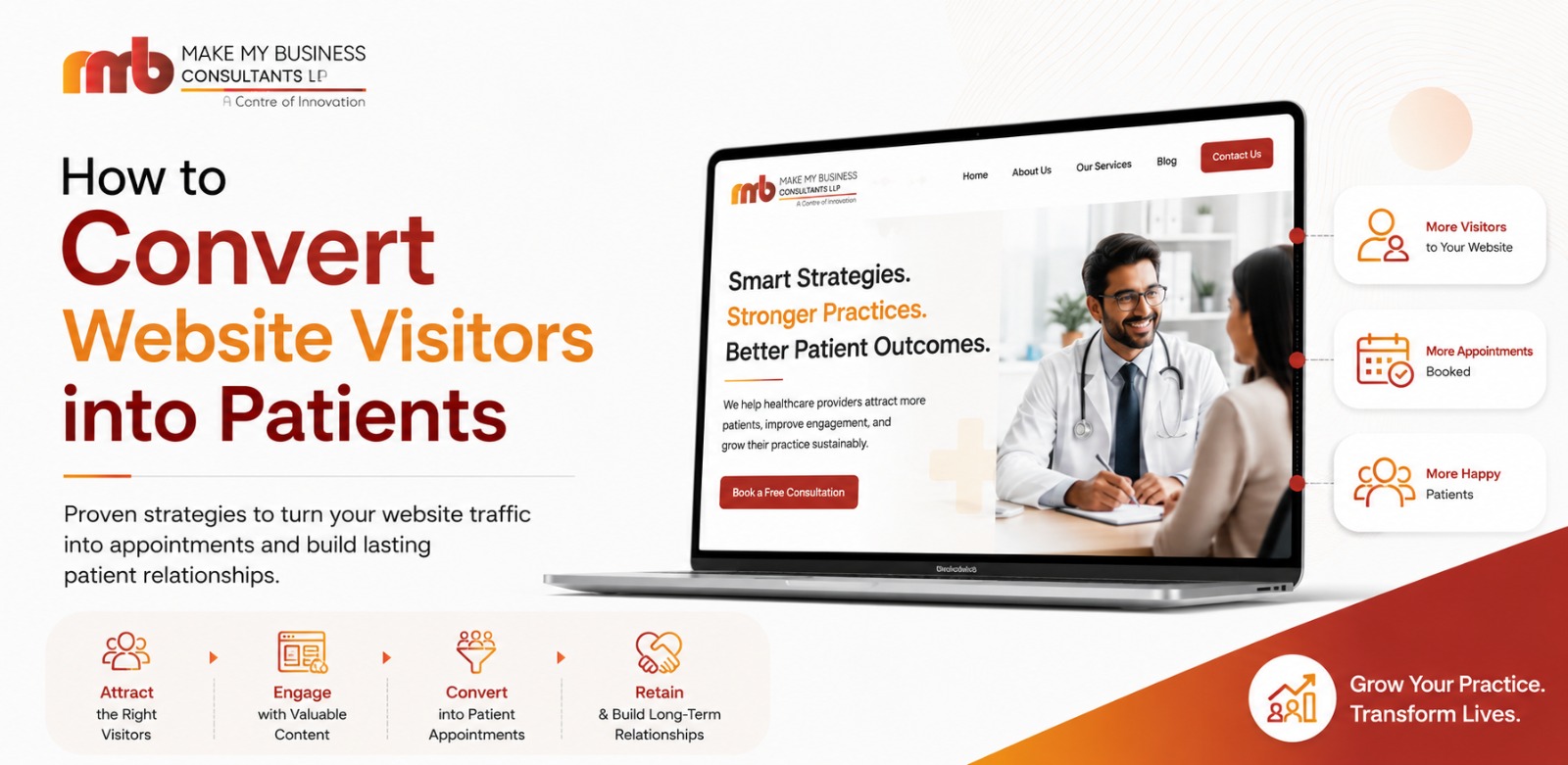
How to Convert Website Visitors into Patients
Nowadays, most patients first turn to Google when seeking accurate...
Read More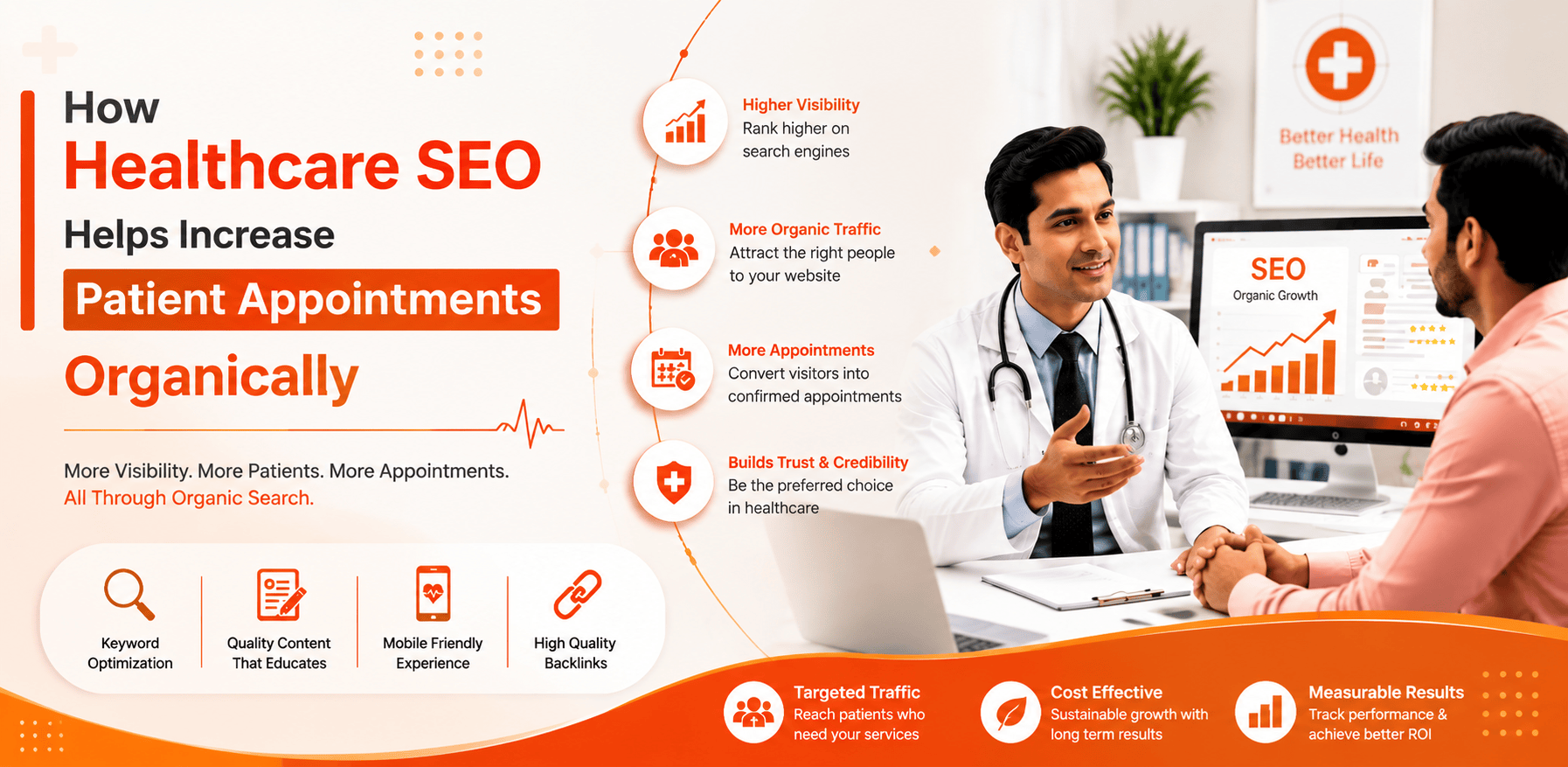
How Healthcare SEO Helps Increase Patient Appointments Organically.
Healthcare SEO helps your website rank better on Google, enabling the right patients...
Read More
Why Are There No Enquiries Despite Traffic to the Hospital Website?
In today's digital era, almost every hospital wants its website to appear at the top of Google search results
Read More

Opening Hours
Monday - Friday (8AM to 7 PM)
Sunday - Closed + 91 : 81279 05132
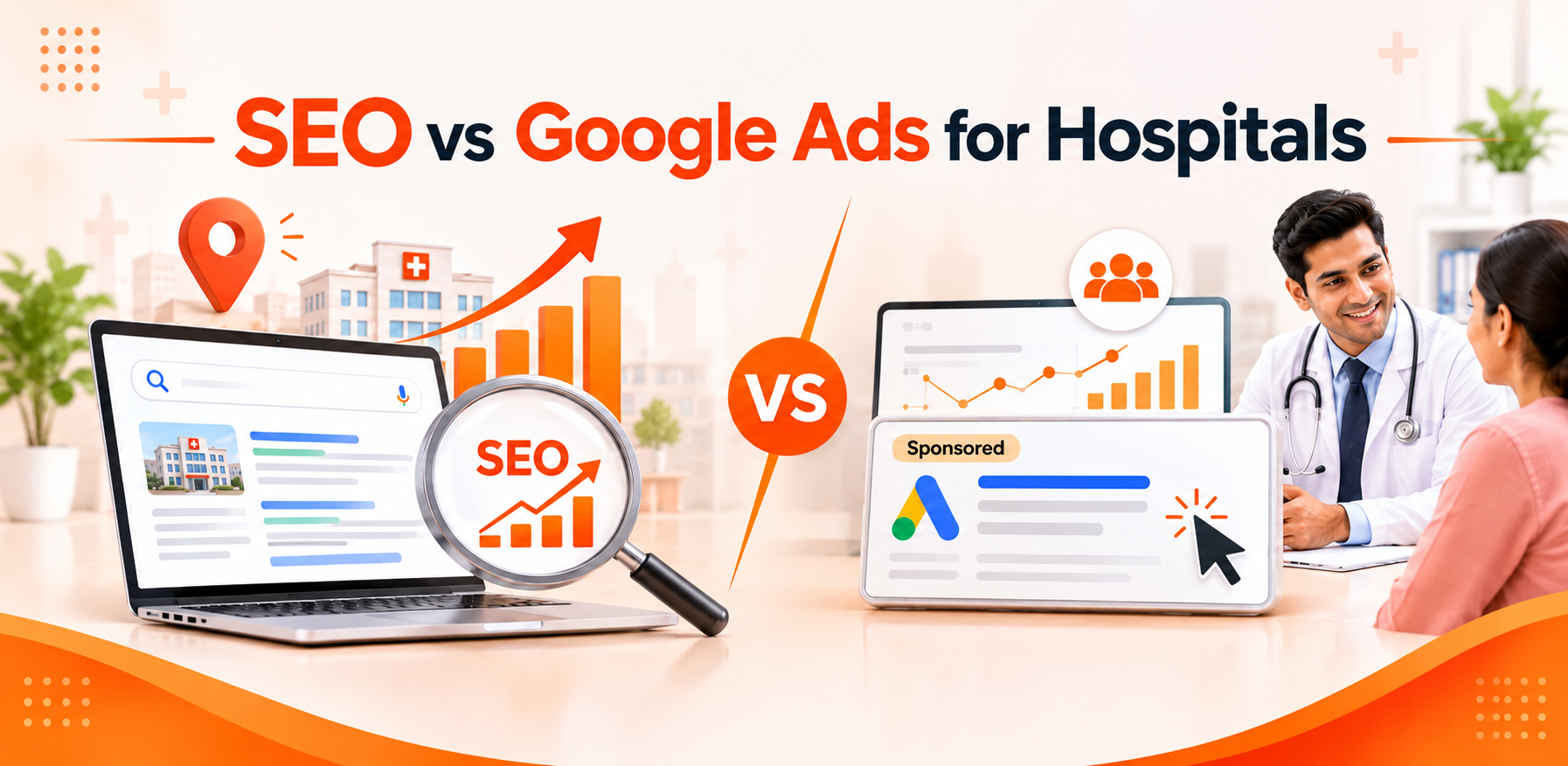
What Is SEO for Hospital Websites?
Think about the last time someone in your family felt unwell. Chances are, one of the first things they did was pick up a phone and type a symptom or a question into Google. Patients today search for a doctor, a treatment, or a hospital long before they walk through your doors.
That is why digital marketing matters so much for healthcare. But it raises a big question for hospital owners and marketing teams: should you invest in SEO for Hospital websites, or in Google Ads for Hospital campaigns? Both can bring patients, but they work very differently. Let's break it down in plain language.
SEO for Hospital websites means improving your site so it appears naturally on Google when people search for services like "cardiologist near me" or "knee replacement surgery cost." You are not paying for each click. You are earning your position through quality content, a good website, and trust.
Key Parts of Hospital SEO
- Local SEO: Optimising your Google Business Profile so you show up in map results and "near me" searches
- Content marketing: Blogs, service pages, and FAQs that answer real patient questions
- Technical SEO: A fast, mobile-friendly, secure website that is easy to navigate
- On-page SEO: Clear titles, headings, and keywords for each department and treatment
- Reputation and reviews: Patient reviews that build credibility and improve local rankings
Why Patients Trust Organic Results
Many people see organic results as more honest than ads. When your hospital appears naturally for a medical search, it feels like a recommendation rather than a sales pitch. In healthcare, where trust is everything, that matters.
What Are Google Ads for Hospital Campaigns?
Google Ads for Hospital campaigns let you pay to appear at the top of search results when someone searches for a relevant term. You bid on keywords, create ads, and pay when someone clicks (pay-per-click).
Key Parts of Hospital Google Ads
- Search ads: Text ads that appear above organic results for specific treatments
- Location targeting: Reaching people only in your city or catchment area
- Call-only and lead form ads: Making it easy to book an appointment in seconds
- Remarketing: Reminding people who visited your website but did not book
- Budget control: Deciding exactly how much you spend per day or month
The Biggest Advantage: Speed
If you launch a campaign today, your hospital can appear on Google today. For a new department, a health camp, or a seasonal service, that speed is hard to match.
SEO vs Google Ads: Head-to-Head Comparison
1. Speed of Results
SEO: Usually takes several months to build
momentum
Google Ads: Can bring enquiries within days of
launch
2. Cost Over Time
SEO: Needs steady investment, but each month
adds to a lasting asset
Google Ads: Costs continue with every click,
and traffic stops when the budget stops
3. Patient Trust
SEO: Builds long-term credibility and brand
authority
Google Ads: Some patients skip ads and prefer
organic results, though ads still convert well for urgent needs
4. Quality of Leads
SEO: Attracts patients researching and
comparing, often at an early stage
Google Ads: Captures patients ready to act,
especially when keywords show clear intent
5. Long-Term Value
SEO: Content and rankings keep working for you
over time
Google Ads: Works only while you keep paying
6. Control and Flexibility
SEO: Results depend partly on Google's
algorithm and are less predictable
Google Ads: You control budget, timing,
location, and messaging
Which One Gives Better Patient Leads?
There is no single winner, because the best choice depends on your hospital's goals, budget, and timeline.
When SEO for Hospital Is the Better Choice
- You want steady, long-term patient growth
- You want to build a trusted brand in your city
- You offer many services and treatments to rank for
- You have a limited monthly ad budget but can invest in content
- You want to lower your cost per patient over time
When Google Ads for Hospital Works Better
- You are launching a new hospital, department, or service
- You need patient enquiries quickly
- You are promoting a health package, camp, or limited-time offer
- You compete in a very crowded market where ranking organically takes time
- You want to test which services bring the most demand
The Honest Answer: Use Both Together
For most hospitals, a combination works best. Google Ads for Hospital campaigns give you quick visibility while SEO for Hospital websites builds a strong, lasting presence. Think of ads as a tap you can turn on and off, and SEO as a well you dig for the future.
Common Mistakes Hospitals Make
Mistake 1: Expecting Instant SEO Results
SEO is a slow burn. Hospitals that give up after two months often miss the growth that follows in months six to twelve.
Mistake 2: Running Ads Without a Good Landing Page
If your ad sends patients to a slow or confusing page, you pay for clicks that never turn into appointments.
Mistake 3: Ignoring Local Search
Most patients choose hospitals close to them. A neglected Google Business Profile means lost leads.
Mistake 4: Not Tracking Results
Track calls, form fills, and booked appointments, not just clicks and traffic. What matters is patients, not page views.
Mistake 5: Using Medical Jargon
Write the way patients speak. Simple, caring language builds trust and gets better engagement.
A Simple Strategy to Get Started
Step 1: Fix Your Foundation
Make sure your website is fast, mobile-friendly, and easy to use, with clear appointment options and contact details.
Step 2: Build Your Local Presence
Claim and complete your Google Business Profile, add photos and services, and encourage happy patients to leave honest reviews.
Step 3: Launch Focused Google Ads
Start with a few high-value services, target your city, and use call and form options. Review performance every week.
Step 4: Create Helpful Content
Publish pages and blogs for each specialty, covering symptoms, treatments, recovery, and costs, and answering what patients really ask.
Step 5: Measure and Improve
Compare the cost per lead from each channel, then shift your budget toward what brings the most booked appointments.
A Note on Ethics and Compliance
Healthcare marketing carries extra responsibility. Avoid exaggerated claims, guaranteed outcomes, or misleading before-and-after promises. Follow your local advertising and medical council guidelines, and protect patient privacy at every step. Honest marketing builds the kind of trust that lasts.
Points to Be Noted
When you compare Digital Marketing for Hospital websites with Google Ads for Hospital campaigns, the real question is not "which is better" but "which is better for right now." If you need patients this month, ads can help. If you want a strong, trusted brand that keeps bringing patients for years, SEO is the foundation. Together, they cover both short-term demand and long-term growth. Start small, track your numbers and keep your patients' needs at the heart of every decision.