Recent Blogs
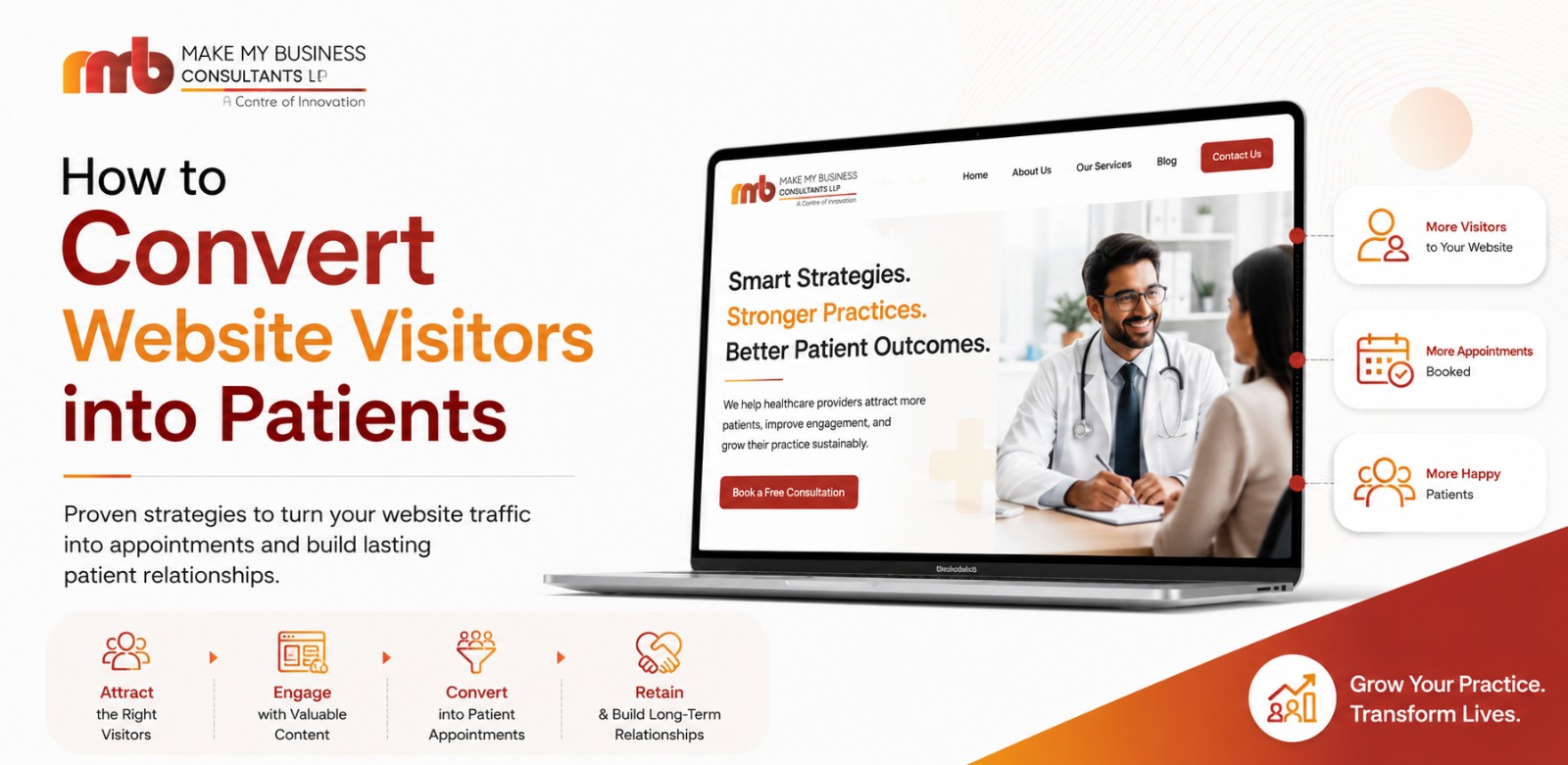
How to Convert Website Visitors into Patients
Nowadays, most patients first turn to Google when seeking accurate...
Read More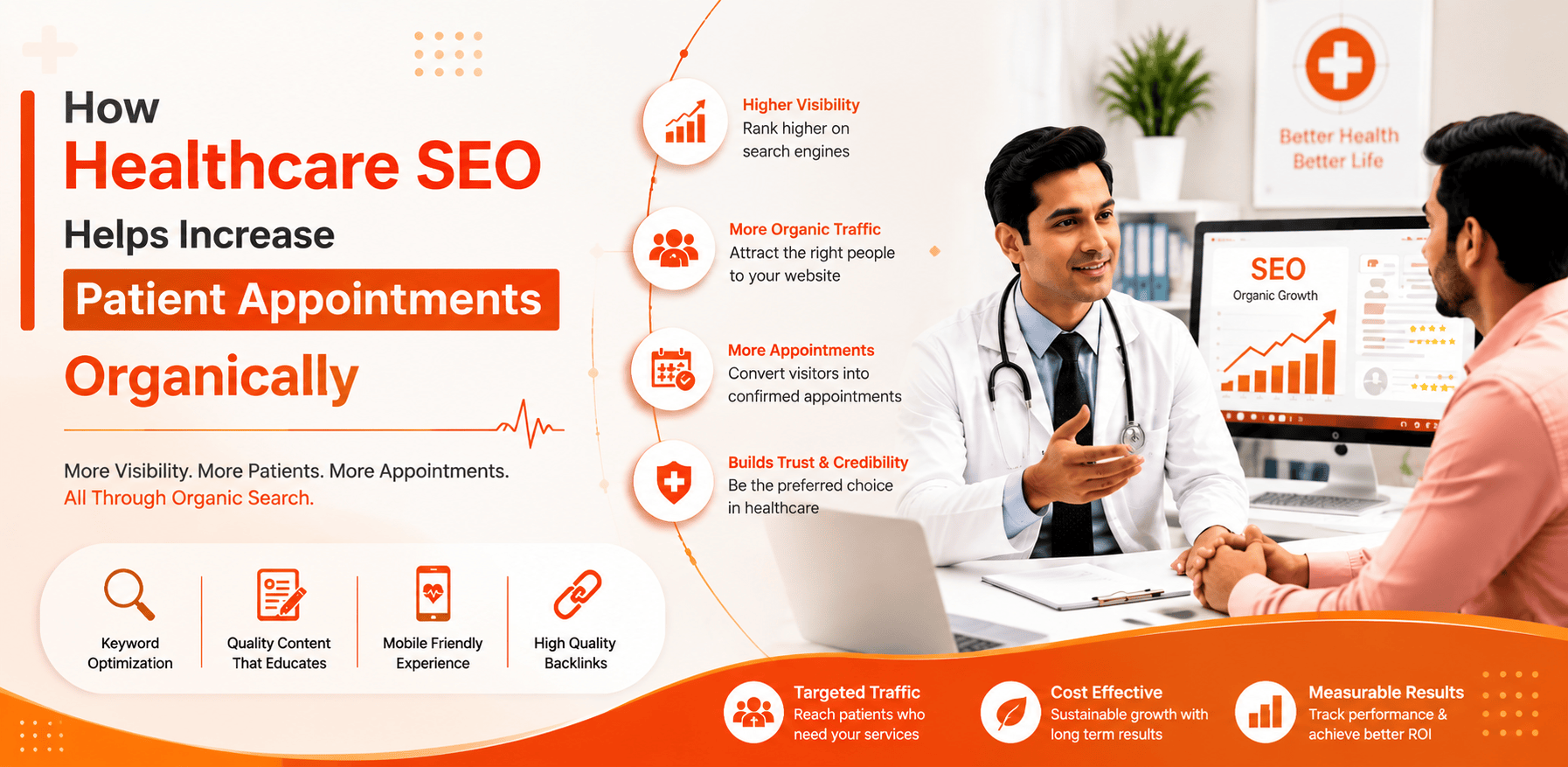
Understanding Why Website Visitors Don't Become Patients?
First and foremost, it is essential to understand that healthcare SEO...
Read More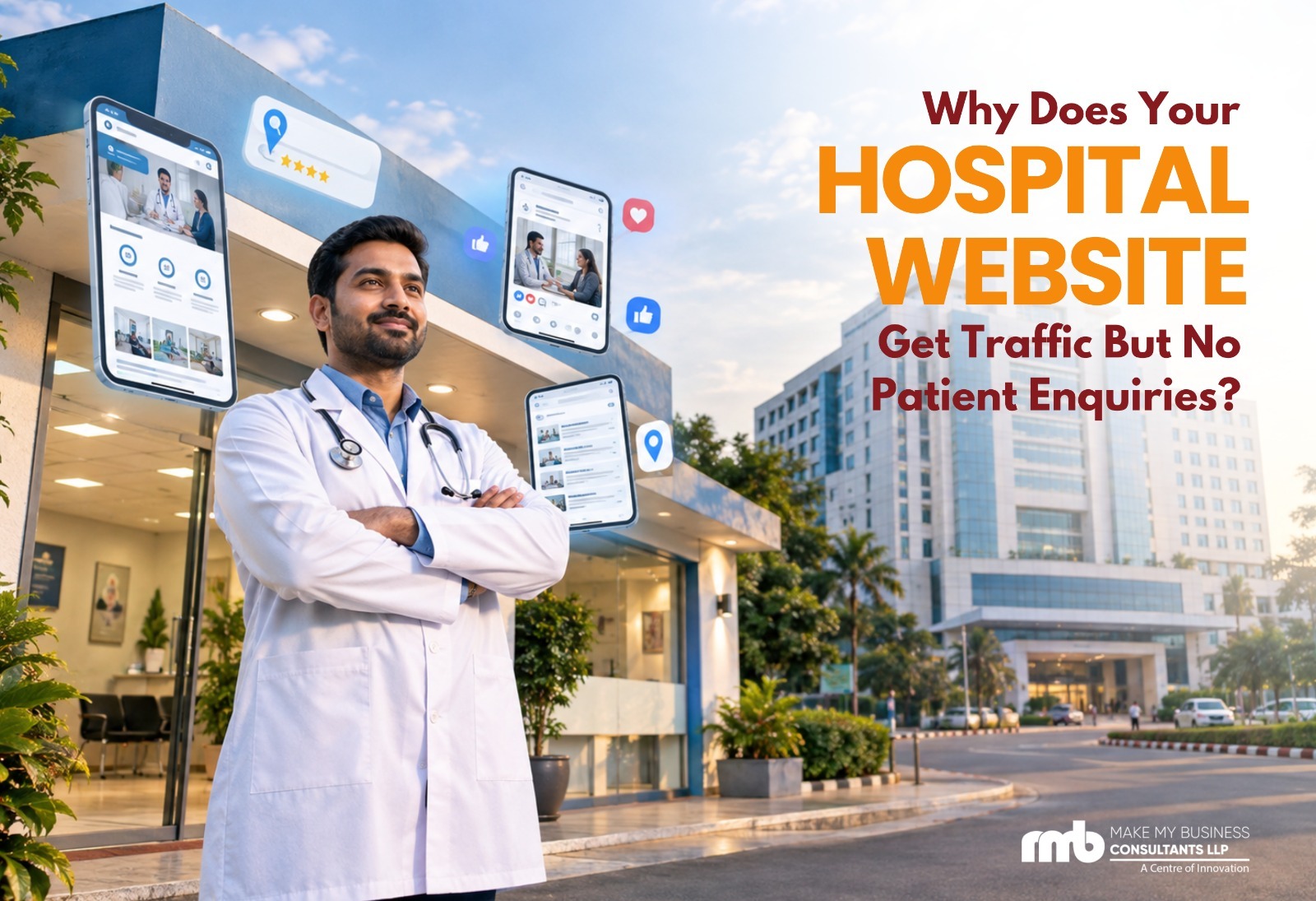
Why Are There No Enquiries Despite Traffic to the Hospital Website?
In today's digital era, almost every hospital wants its website to appear at the top of Google search results
Read More

Opening Hours
Monday - Friday (8AM to 7 PM)
Sunday - Closed + 91 : 81279 05132

In today's digital era, almost every hospital wants its
website to appear at the top of Google search results, attract
a large number of visitors, and generate patient enquiries and
appointments. However, many hospitals face a major challenge:
they receive website traffic but fail to generate patient
enquiries. But why does this happen?
If your
hospital website
attracts a good number of visitors every month but receives
very few calls, appointment requests, or enquiry forms, the
problem likely lies not with the traffic itself, but with your
conversion strategy. To put it simply: your website is
successfully attracting people, but it isn't giving them a
compelling enough reason to take the next step.
This is precisely why the issue of a hospital website failing
to generate leads cannot be resolved by SEO alone. It requires
a holistic approach that addresses website design, content,
trust signals, user experience, and conversion optimization.
Website traffic and patient enquiries are two distinct things.
Even with thousands of visitors, conversion rates can remain
low if the website isn't tailored to the patient's specific
needs.
Lack of a Clear Call-to-Action (CTA) on the Website
Many hospital websites provide information about doctors,
departments, and facilities but fail to clearly guide the
patient on what to do next. If a visitor doesn't see a clear
button for booking an appointment, consulting a doctor, or
making an enquiry, they may simply leave the site.
Clear CTA buttons like "Book an Appointment," "Consult a
Doctor," "Request a Callback," and "Call Now" can help
encourage patients to take action.
Difficulty Finding Contact Information
Patients often visit a hospital website seeking specific information, such as how to see a doctor, the hospital's address, phone number, appointment timings, or available services. If the contact number or appointment booking option is buried deep within the site and requires multiple clicks to find, the likelihood of conversion drops significantly. In this context, contact and appointment options should be clearly visible in the website's header, service pages, and mobile version.
How to Improve Healthcare Website Conversions?
Increasing healthcare website conversions simply means encouraging visitors to take meaningful actions. To achieve this, it is essential to make the website patient-centric.
Create Dedicated Pages for Each Important Service
If a hospital offers multiple services, instead of listing
them all on a single page, separate dedicated pages can be
created for each.
For example:
- Cardiology : Provides patients with information regarding the diagnosis and treatment of heart diseases and consultations with specialist doctors.
- Orthopaedics : Offers information on treatments and specialist services related to bones, joints, muscles, and injuries.
- Gynaecology : Provides details on medical services related to women's health, pregnancy, hormonal issues, and gynaecological conditions.
- Neurology : Supplies patients with information on the diagnosis and treatment of disorders affecting the brain, nerves, and nervous system.
- Cancer Treatment : Offers key information regarding cancer screening, treatment, specialist consultations, and available medical facilities.
- Emergency Services : Provides details on the hospital's emergency services, availability, and contact information for critical or sudden health issues.
- Diagnostic Services : Informs patients about available screenings, tests, reports, and diagnostic facilities used to identify various diseases.
Each service page should include details about the treatment, relevant doctors, facilities, location, and a Call-to-Action (CTA) for appointments. This allows visitors arriving from Google to quickly find information relevant to their specific needs.
Strengthen Doctor Profiles
In healthcare, the doctor is the primary factor in building patient trust. Therefore, a doctor's profile should not be limited to just their name and qualifications. Profiles can include details such as qualifications, specializations, experience, areas of expertise, consultation availability, and appointment options. This makes it much easier for visitors to understand the doctor's expertise and book an appointment.
- Build Patient Trust on the Website : In healthcare, conversions aren't driven solely by attractive design; patients need to trust the hospital.
- Display Reviews and Testimonials : Real patient reviews and testimonials help build trust on the website. Positive feedback regarding hospital services or doctors can be showcased on relevant pages.
However, testimonials must be used transparently and ethically. It is essential to avoid any misleading or unverifiable claims.
Highlight Hospital Credentials and Facilities
Relevant credentials, such as NABH accreditation, qualified doctors, advanced equipment, specialized departments, and hospital infrastructure should be clearly displayed on the website. This helps new visitors understand the hospital's capabilities.
Why is a Mobile-Friendly Website Essential?
Today, many people search for information about hospitals and doctors using smartphones. If your website looks great on a desktop but is slow or difficult to navigate on mobile, you could lose out on potential inquiries.


Optimize the Mobile Experience.
On the mobile website :
- The appointment button should be easily visible.
- Users should be able to call directly by clicking the phone number.
- The inquiry form should be short and simple.
- Pages should load quickly.
- Text should be easy to read.
- Location and directions should be easily accessible.
A smooth mobile experience plays a crucial role in increasing online patient inquiries.
How Does Website Speed Affect Conversions?
If a website takes too long to load, visitors may leave for
another site instead of waiting. Ensure fast-loading pages:
While images and videos are often necessary for a hospital
website, they must be properly optimized. Heavy images,
unnecessary scripts, and poorly optimized pages can negatively
impact website speed. A fast-loading website enhances the user
experience and can help retain visitors on the site for longer
periods.
Content Should Generate Conversions, Not Just Provide Information
The content on many hospital websites is quite generic. For instance, statements like "We provide superior healthcare services" do not offer patients any specific information.
Create Content Based on Patient Intent
If someone searches for keywords like "best cardiologist in Lucknow" or "cardiology consultation near me," they aren't just looking for a general introduction to the hospital.
They want to know :
- Which doctor is available?
- How can I get a consultation?
- Where is the hospital located?
- What kind of treatments are available?
- How do I book an appointment?
Website content should provide clear answers to these specific questions.
Keep Enquiry Forms Simple
Creating an overly long enquiry form is a common mistake. Asking for excessive information might cause a patient to leave the website without completing the form.
Create Short and Easy Enquiry Forms
Initially, you can collect only essential details like name, phone number, preferred department, or appointment requirements. The hospital team can gather the remaining information later via a phone call.
Direct Google Ads and SEO Traffic to the Right Landing Page
If the hospital is spending money on Google Ads or SEO, simply sending traffic to the homepage isn't always the best strategy.
Create Campaign-Specific Landing Pages
If an advertisement is for cardiology services, it is often better to direct visitors straight to the cardiology landing page. The landing page should feature the relevant doctor, treatment details, hospital facilities, and a clear Call-to-Action (CTA) for appointments. This can help mitigate issues like the hospital website failing to generate leads.
Conversion Tracking is Essential
You need to know how many website visitors are actually making enquiries. The following actions on the hospital website can be tracked:
- Appointment bookings
- Phone calls
- WhatsApp enquiries
- Contact form submissions
- Doctor appointment requests
- Clicks for location or directions
This data reveals which pages and marketing channels are driving actual enquiries.
Focus on Quality Traffic, Not Just Volume.
High website traffic doesn't always translate to more patients. If the majority of your 10,000 visitors don't actually need the hospital's services, a large traffic volume won't be very beneficial for the business.
Understand Patient Intent
SEO and digital marketing campaigns should focus on keywords
and audiences that demonstrate a genuine intent to seek
healthcare services. For instance:
Searches focused on appointments and treatments often hold
greater conversion potential compared to purely informational
keywords.
Why is a Hospital Website Conversion Audit Essential?
If your website traffic is steadily increasing but enquiries are not, a detailed Website Conversion Audit can prove extremely valuable.
What Should the Audit Examine?
A comprehensive audit can evaluate website design, mobile experience, page speed, CTA placement, landing pages, enquiry forms, doctor profiles service pages, SEO traffic, conversion tracking, and the user journey. This helps identify at which stage visitors are leaving the site and what the biggest obstacles to conversion are.
A Complete Strategy to Increase Online Patient Enquiries
Hospitals should not rely solely on SEO or Google Ads to
increase online patient enquiries. An effective strategy
requires a combination of SEO, Google Ads, social media
marketing, conversion-focused website design, quality content,
strong doctor profiles, and conversion tracking.
Most importantly, digital marketing and the hospital website
should not be viewed in isolation but as part of a holistic
patient acquisition journey.
The Conversion Process
If your hospital website is attracting traffic but failing to
generate patient enquiries, it does not necessarily mean your
digital marketing has failed completely; the issue may lie
within the conversion process itself.
Clear CTAs, mobile-friendly design, fast-loading pages,
dedicated service pages, strong doctor profiles,
patient-centric content, and simple enquiry forms can all help
improve website conversions. Additionally, directing traffic
from SEO and Google Ads to the right landing pages and
tracking every key conversion is crucial. Remember, the goal
of hospital digital marketing should not merely be to increase
traffic, but to convert relevant visitors into genuine
enquiries and appointments.
Get a Free Conversion Audit for Your Hospital Website
Is your hospital website attracting traffic, yet failing to
generate the expected number of enquiries and appointments?
Get a free website audit or consultation from MMB Consultants
to identify the biggest barriers to conversion on your website
and discover the changes needed to increase online patient
enquiries.